
Organic Matter and Humus: What Soil Organic Matter % Means
Understand how soil organic matter (SOM %) improves water storage, feeds beneficial organisms, and enhances topsoil structure.
Soil organic matter consists of decomposed plant residues and stable humus that feed soil life and improve moisture retention in topsoil.
Visualizing Topsoil Organic Inputs & Decomposition
This three-stage visual sequence illustrates surface organic inputs, biological decomposition, and aggregated topsoil structure.
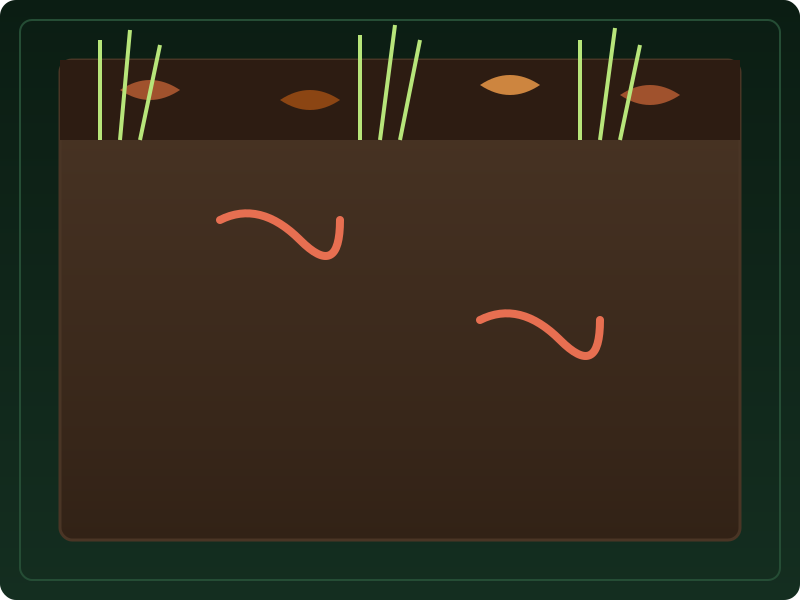
Plant Residues Accumulate at the Surface
Fallen leaves, plant roots, and organic residues enter the ground surface, providing biological feedstocks for decomposers.
What to notice: Biological activity is concentrated near the ground surface.
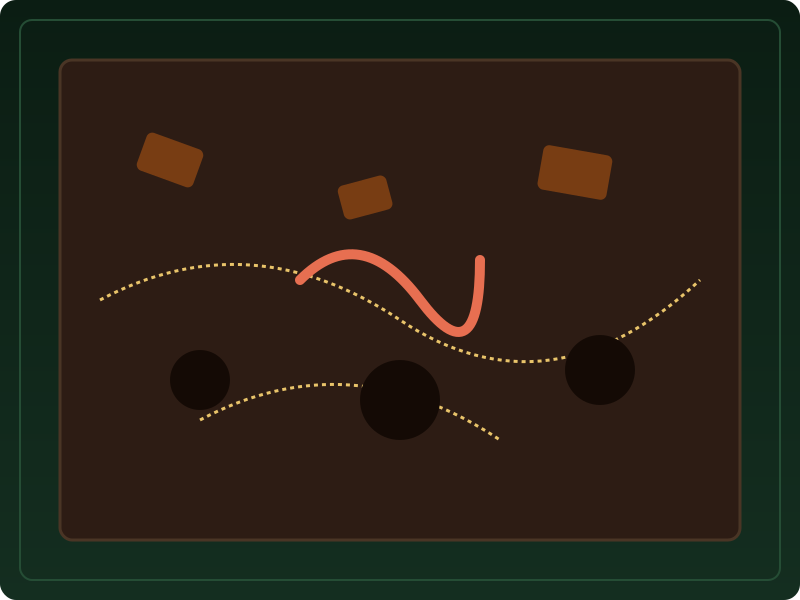
Organisms Transform Residues into Humus
Earthworms, fungi, and beneficial bacteria decompose raw plant residues into dark, stable humus that binds soil minerals into crumb-like aggregates.
What to notice: Decomposers break down plant residues into stable humus.
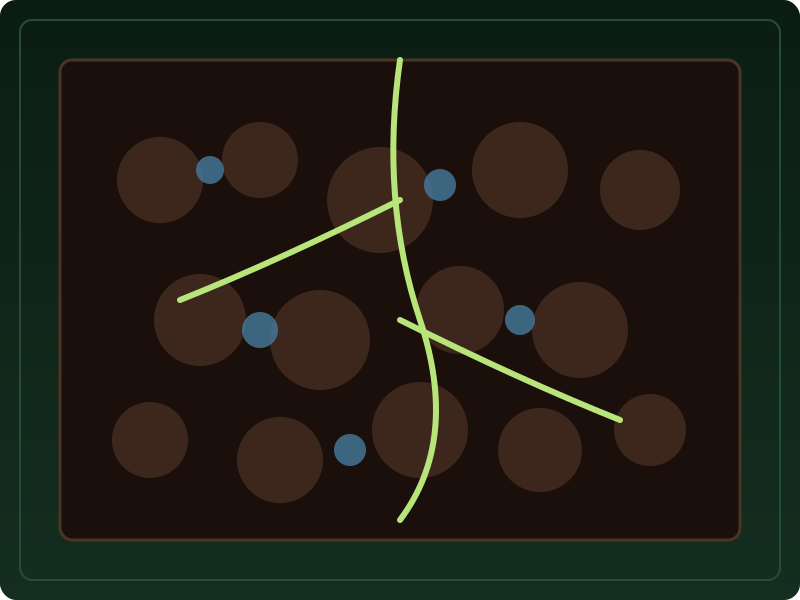
Humus Enhances Moisture & Nutrient Storage
Stable humus improves topsoil pore structure, allowing topsoil to absorb rainwater readily while holding essential mineral nutrients for roots.
What to notice: Porous topsoil aggregates improve water storage capacity.
Key Takeaways
- Organic matter improves topsoil moisture holding capacity and nutrient availability.
- SOM values are horizon-specific and highest in surface topsoil (A Horizon).
- Mapped SOM values represent natural survey averages.
Decomposition and Humus
Soil organic matter is plant and animal residue at various decomposition stages.
Organic matter creates dark, fertile topsoil capable of supporting lawns and gardens.
Organic matter percentage is normally surface horizon-specific. A topsoil SOM value must not automatically be presented as representative of the entire subterranean profile.
Official USDA Field Explanation: Soil Organic Matter
Soil Organic Matter Percentage (SOM %)
1. What is it? (Plain English)
The percentage of soil composed of decomposed plant residue, compost, and humus.
Technical definition: The plant and animal residue in the soil at various stages of decomposition.
2. How USDA Reports This Field
chorizon.om_r3. Why it matters for soil evaluation
High organic matter increases moisture holding capacity, feeds soil organisms, and improves topsoil structure.
4. What This Field Does NOT Prove (Limitations)
- Organic matter values are horizon-specific; topsoil SOM does not apply to deep subsoil.
- Surface tillage and lawn fertilizing change SOM over short periods.
USDA soil survey data provides broad mapped screening information across soil polygons. Field conditions on individual building lots can vary due to past grading, excavation, or micro-topography. Always consult a licensed geotechnical engineer or soil scientist for on-site parcel decisions.
How Organic Matter Appears in Subsurface Atlas Records
Subsurface Atlas reports SOM percentages by horizon layer.
Property Relevance
Screening context for topsoil fertility and moisture holding.
Surface soil testing is recommended before planting or fertilizing.
Survey Limitations & Notes
- Surface tillage and lawn fertilizing alter topsoil SOM over short periods.
Common Myths vs. Reality
SOM drops sharply below the A horizon.
Primary Sources & References
Want to see what soil layers exist under your property?
Enter any U.S. address into Subsurface Atlas to explore mapped USDA soil units, components, drainage classes, and horizon profiles.
Run Address Lookup →